Bingo Through Time: Historical Influences on Modern Strategies
Leon Schmid · Sep 27, 2026

Bingo Through Time: Historical Influences on Modern Strategies
Bingo traces its origins to 16th-century Italy where the game known as Il Gioco del Lotto d'Italia featured numbered tickets drawn from a container and this format spread to France in the 18th century as Le Lotto before arriving in Britain and later North America during the 1920s when toy manufacturer Edwin Lowe adapted it into the version played today. Observers note that these early structures relied on fixed number pools and sequential draws which continue to influence how contemporary players select cards and manage their selections because the mathematical distribution of numbers in traditional 75-ball and 90-ball formats remains largely unchanged from those historical setups.
Early European Foundations and Number Systems
Italian lotteries operated with cards containing rows of numbers drawn randomly from a pool of 90 while French adaptations reduced the pool and introduced row completion requirements that persist in modern European bingo variants and researchers have documented how these systems created predictable clustering patterns that players in the 1700s already attempted to exploit through bulk card purchases. Data from archival records shows that 19th-century British bingo halls used similar 90-ball grids with columns organized by tens and this organization still guides many online platforms today where players focus on covering specific number ranges early in a game to maximize coverage efficiency.
North American Adaptation and Industrial Growth
Edwin Lowe standardized the 75-ball format with five-by-five cards and letter prefixes in the 1930s after observing a game in Georgia and this change introduced the B-I-N-G-O column structure that now defines most American bingo sessions while also creating new strategic considerations around letter-specific number groups. Studies from gaming historians indicate that the rapid commercialization in the United States during the 1940s and 1950s led to larger prize pools and more frequent sessions which encouraged players to develop bankroll allocation methods still taught in strategy guides because the increased volume of games amplified the impact of any single card selection decision.
Patterns Carried Forward Into Digital Play
Contemporary online platforms retain the core number distribution mechanics from these earlier eras yet add features such as auto-daubing and multiple-card play that build directly on historical precedents where players managed stacks of physical cards during marathon sessions and analysts tracking participation rates note that the same preference for cards with even number spreads across columns appears in both 1950s paper-based records and current digital session data. What's interesting is how the shift to electronic random number generators in the 1990s preserved the exact probability structures of mechanical ball machines so that strategies centered on avoiding over-concentration in one column remain statistically relevant.
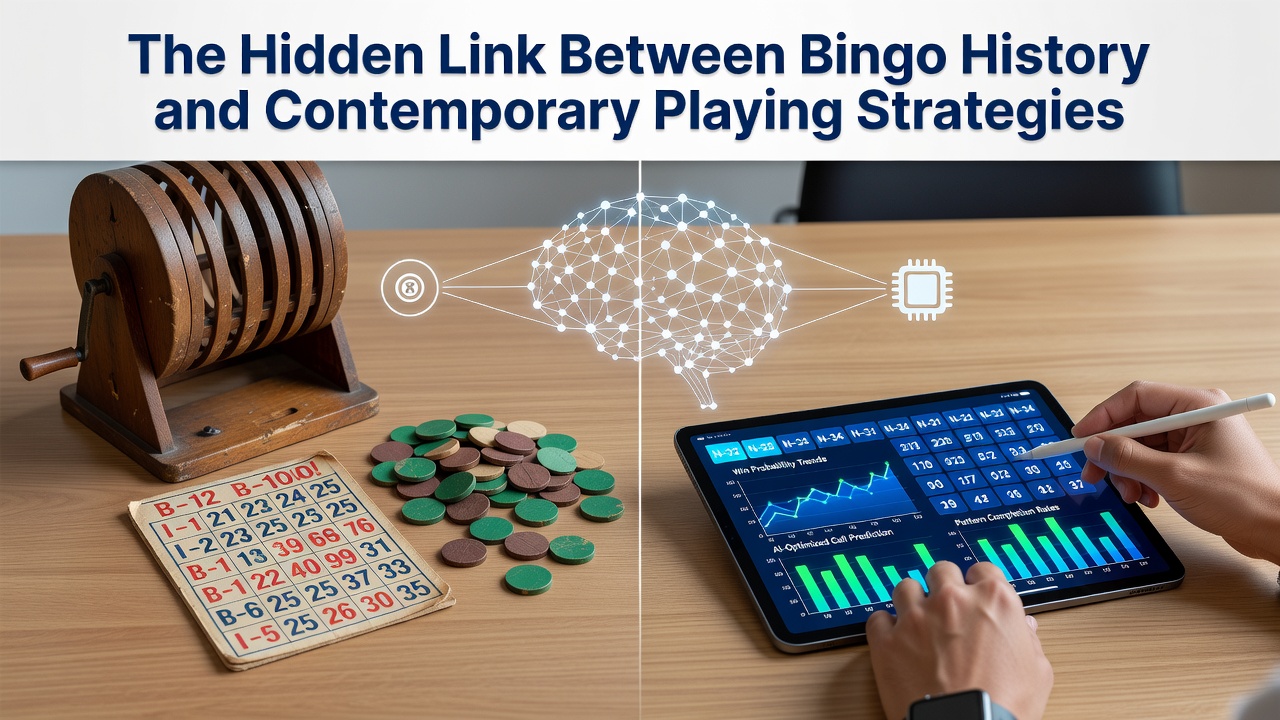
Regulatory updates scheduled for September 2026 in several North American jurisdictions are expected to standardize reporting on game outcome transparency and this development may further highlight how historical number pools affect modern return-to-player calculations because operators must now disclose the same distribution rules that governed 1920s bingo parlors. Industry reports from the American Gaming Association show steady growth in bingo participation alongside table games while data compiled by the University of Nevada, Las Vegas Center for Gaming Research demonstrates that players who apply column-balance tactics derived from early 75-ball layouts achieve marginally higher coverage rates across large sample sizes.
Strategic Echoes in Multi-Player Environments
Community halls of the mid-20th century fostered social observation of other players' card selections and this practice translates today to chat functions and shared pattern tracking in virtual rooms where participants monitor which number groups remain undrawn and adjust future purchases accordingly. Observers have recorded that the emphasis on completing rows or full houses first emerged from French and British variants and continues to dictate priority ordering in strategy software because those completion mechanics create the same tension between speed and coverage that existed when cards were sold in physical batches.
Canadian provincial lotteries have published participation statistics indicating that hybrid bingo formats blending 75-ball and 90-ball elements attract players who apply hybrid selection methods rooted in both historical traditions and these combined approaches allow participants to hedge against the distinct column distributions preserved from each origin point. Research indicates that the underlying probability matrices have not shifted despite technological changes so that card-purchasing patterns observed in 1930s American carnivals still appear in aggregated server logs from global operators.
Conclusion
The connections between bingo's documented history and present-day tactics rest on unchanged number pools, column structures, and completion rules that originated centuries ago and continue to shape player decisions in both physical and digital settings. As reporting requirements evolve through 2026 and beyond, the persistence of these foundational elements provides a clear framework for understanding why certain selection methods endure across generations of the game.